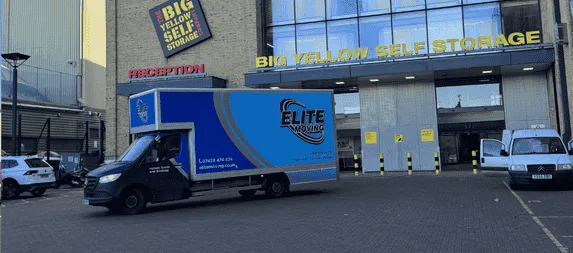
Moving home or relocating abroad can be one of the most stressful life events — but it doesn’t have to be. With the right plan, a trusted moving company, and smart use of storage, you can turn chaos into calm.
At Elite Moving, we’ve handled thousands of relocations across the UK and Europe — from compact city flats to grand villas in France, Switzerland, and beyond. This guide shares our professional insight on how to plan your move, protect your belongings, and use storage to simplify your journey.
1. Planning Your Move: When to Start and What to Do First
The earlier you start planning, the smoother everything runs.
Eight to Twelve Weeks Before Moving
-
Create a moving folder — store quotes, receipts, and checklists.
-
Begin decluttering — sell, donate, or dispose of unused items.
-
Request quotes from reputable movers (ideally with insurance and customs expertise if moving abroad).
-
Book time off work for your move.
Four to Six Weeks Before Moving
-
Confirm your chosen moving company.
-
Order packing materials or arrange a professional packing service.
-
Notify schools, banks, and utility providers of your change of address.
-
Decide what goes into storage versus what travels directly.
One to Two Weeks Before Moving
-
Pack non-essentials and label every box by room and content.
-
Arrange storage if your new property won’t be ready in time.
-
Confirm dates, parking, and access arrangements with your moving crew.
2. Budgeting Your Move and Storage
Costs vary widely based on volume, distance, access, and services required.
Here’s a general guide to budgeting:
| Service | Typical Pricing (UK / EU) | Notes |
|---|---|---|
| Local move | Hourly rate or fixed quote | Based on truck size & crew |
| European move | £100–£200 per m³ | Includes transport, customs, delivery |
| Packing service | ~£1 per cubic foot | Includes materials |
| Storage | £20–£25 + VAT per crate/week | Long-term discounts available |
💡 Pro tip: Always get a written quote that lists what’s included — transport, fuel, insurance, stairs, customs, etc. Avoid verbal estimates.
3. Choosing the Right Moving Company

Not all movers are equal. A few key signs of a professional moving service include:
-
Transparent pricing with clear volume or hourly breakdowns
-
Fully insured for domestic and international moves
-
Experienced crews trained in export packing, fragile handling, and customs documentation
-
Positive reviews on Google, Trustpilot, or verified platforms
-
Accreditation or membership with industry bodies (e.g., BAR, IAM)
Before booking, ask:
-
Do you provide inventory lists and insurance coverage?
-
Can you assist with customs or import paperwork?
-
What happens if there are delays or access issues?
4. Packing Tips from the Professionals
Essentials
-
Use sturdy, double-walled boxes.
-
Heaviest items at the bottom, lighter items on top.
-
Fragile items: wrap individually in bubble wrap or paper.
-
Label boxes on multiple sides for easy identification.
-
Keep an inventory list — note box numbers and key contents.
Room-by-Room Strategy
-
Kitchen: pack glassware upright, tape boxes “FRAGILE.”
-
Bedroom: use wardrobe boxes for hanging clothes.
-
Living Room: protect electronics in original boxes when possible.
-
Garage/loft: declutter heavily; avoid transporting prohibited items (paint, fuel, aerosols).
Pro Tip: Elite Moving offers full and partial packing and export wrapping services, ideal for long-distance and international moves.
5. Storing Your Belongings Safely
Whether you need a few weeks between properties or long-term storage abroad, understanding your options helps keep your items protected.
Types of Storage
-
Short-term storage: ideal for temporary gaps between moves.
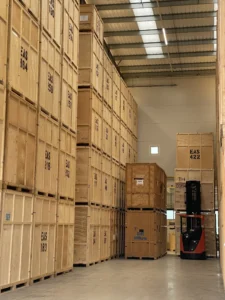
Elite Moving’s modern containerised storage warehouse – featuring secure, ventilated storage crates for furniture, boxes, and commercial goods, all professionally inventoried and monitored. -
Long-term storage: suitable for overseas relocations or downsizing.
-
Containerised storage: secure wooden crates sealed at collection, stored in CCTV-monitored warehouses.
-
Self-storage units: accessible but often less secure and more costly over time.
What to Look For
-
Clean, dry, pest-free facility
-
24-hour CCTV and alarmed access
-
Inventory tracking and sealed containers
-
Insurance and fire protection systems
Preparing Items for Storage
-
Clean and dry all items before storage.
-
Use breathable materials (avoid plastic wraps on upholstery).
-
Disassemble large furniture.
-
Store heavier boxes on the bottom and leave a small walkway for access.
6. Moving Day: What to Expect
Before the Crew Arrives
-
Set aside valuables, keys, passports, and documents.
-
Defrost your fridge/freezer at least 24 hours prior.
-
Confirm the truck has easy access and parking permissions.
During the Move
-
The crew will inventory and label items.
-
Fragile or high-value goods will be wrapped in protective materials.
-
If using storage, the sealed crates will be transported to the warehouse directly.
At Delivery
-
Check all items off against your inventory.
-
Inspect for damage and report anything immediately.
-
Position boxes in relevant rooms to save time unpacking.
7. Moving Abroad: Customs, Taxes & Transport Options
International moves add complexity — but the right partner makes it straightforward.
Transport Options
-
Dedicated vehicle: your goods travel directly from origin to destination.
-
Part-load / groupage: cost-effective shared service for smaller shipments.
-
Container shipping: ideal for overseas destinations like Australia or Canada.
Documents You May Need
-
Passport copies and proof of residence
-
Packing inventory (in English and destination language)
-
Customs declarations (ToR1, T1, etc.)
-
Vehicle registration and valuation (for car transport)
Taxes & Duties
Rules vary, so check with your mover or customs agent.
8. Insurance: Protecting Your Possessions
Even with professional handling, accidents can happen.
Ensure you have:
-
Standard liability insurance (usually £2,500–£10,000 included)
-
Extended or full-value cover for high-value items
-
Clear understanding of claim process and time limits
Elite Moving offers coverage up to £100,000 for peace of mind on premium shipments.
9. After the Move: Settling In Smoothly
-
Reconnect utilities and broadband.
-
Unpack essentials first — kitchen, bedding, and work essentials.
-
Schedule furniture placement before unpacking everything.
-
Recycle packing materials — we collect and reuse cartons on request.
-
Leave a review or feedback — it helps other customers and improves service.
Conclusion
Moving doesn’t have to be overwhelming. Whether you’re relocating across London, into Europe, or simply downsizing into storage, careful planning and a professional team make all the difference.
At Elite Moving, we combine expert logistics, secure storage, and five-star customer care to deliver peace of mind at every step.
👉 Get your free quote today — call +44or email info@elitemoving.co.uk